Skip to content
D2312. Blue and White Flower Vase

Blue and White Flower Vase

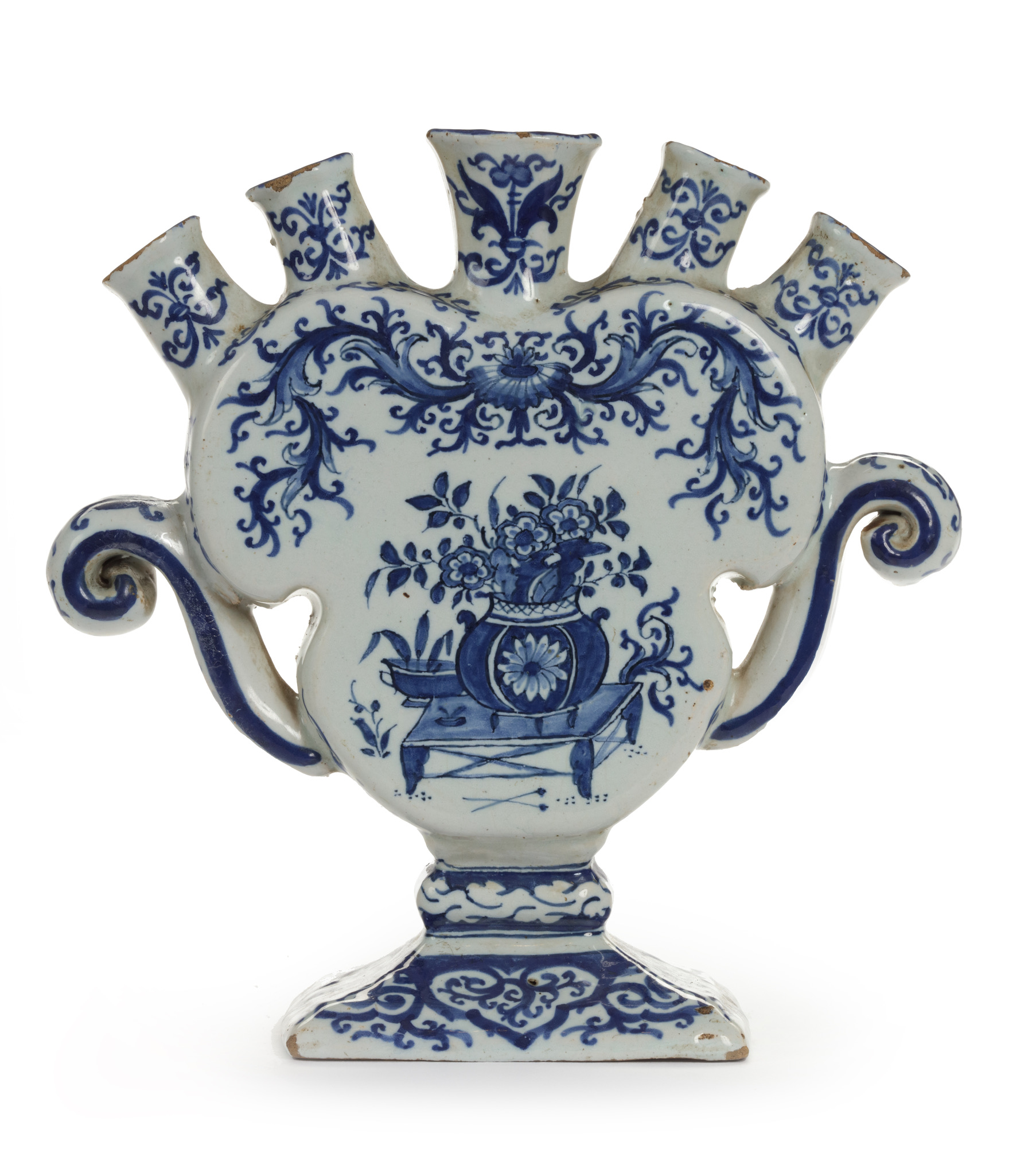
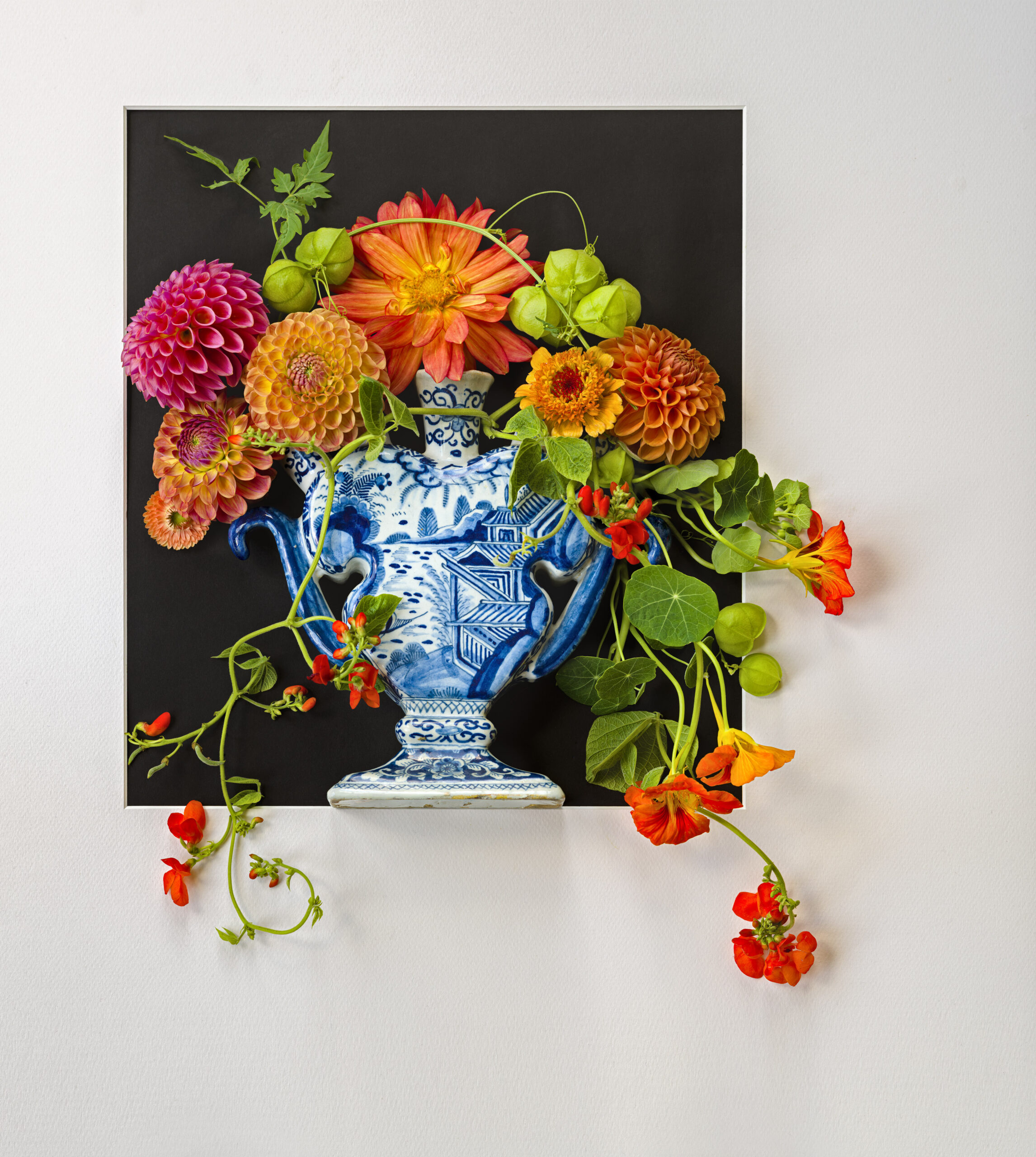
Every month we present a special object from the Aronson Antiquairs’ collection. This month we would like to show you this blue and white flower vase, from circa 1710. Quintel vases have five spouts and were amongst the earliest examples of spouted vases. The heart-shaped model with five spouts, such as the present one, followed the early quintel…

The fan-shaped flower holder: form, function and international origins

Main image by Marie Louise Photography. Blue and White Flower Vase, marked CK for Cornelis Koppens, owner of De Metaale Pot (The Metal Pot) factory from 1724 to 1757, Delft, circa 1730, Aronson Collection (inv. no. D2211) Delft flower vases with multiple spouts have been admired since their earliest production in the last quarter of…

D2045. Pair of Blue and White Models of Shoes Delft, circa 1760

Pair of Blue and White Models of Shoes

Every month, we highlight a remarkable piece from the Aronson Antiquairs collection. This month we present this beautiful pair of blue and white model of shoes, from circa 1760. Miniature ceramic shoes like this pair were commonly sold at annual fairs and regional markets throughout the Low Countries. While most examples are undated, some bear…

Sinterklaas and the Shoe: Delft Miniatures in a Dutch Tradition of Giving

Main image: Jacob Houbraken, Het Sint Nicolaasfeest, Engraving, 1761, Collection Rijksmuseum, Amsterdam (inv. no. RP-P-1938-1443) The footwear worn by the figures in the engraving correspond perfectly with the Delft miniature shoe models. On 5 December, many people in the Netherlands celebrate Sinterklaas (Saint Nicholas), a time-honored occasion rich in history, ritual, and joy. It is…

Large Imari Dish

Large Imari Dish

Every month, we highlight a remarkable piece from the Aronson Antiquairs collection. This month we present this magnificent large Imari dish, painted in a vibrant palette inspired by the luxurious porcelain imported from Japan. Produced in Delft around 1710, this dish embodies the period’s fascination with the exotic and the elegant synthesis of Eastern and…

The Graceful and the Playful: Lange Lijs and Zotje on Delft faience

Main image: Polychrome plaque, Delft, circa 1740-1760, former Aronson Collection (inv. no. D0731) Since Chinese porcelain entered the Dutch market around 1600, it captured people’s imagination and laid the foundation for Delft faience. One of the most fascinating aspects of this cultural exchange is the transformation of Chinese motifs, often associated with deep symbolic meanings,…

Blue and White Cuspidor

Every month we present a special object from the Aronson Antiquairs’ collection. This month we would like to show you this beautiful blue and white cuspidor, which was made in the city of Delft around 1750. The word ‘cuspidor’ (kwispedoor) comes from the same word in Portuguese: cuspidouro, meaning ‘place for spitting’ and has its…

Japanese Influences on Dutch Delftware

Main image: View on the Dutch trade base on Deshima, circa 1890, Leiden University Libraries (shelf no. KITLV 36D536) Since 2006, CAMERA JAPAN has been an annual celebration of Japanese culture, taking place each autumn in Rotterdam. This year, the festival runs from September 24–28. While rooted in contemporary Japanese cinema, its scope extends far…

Back To Top