The Winter Show, Park Ave Armory, January 19 — 28, 2024
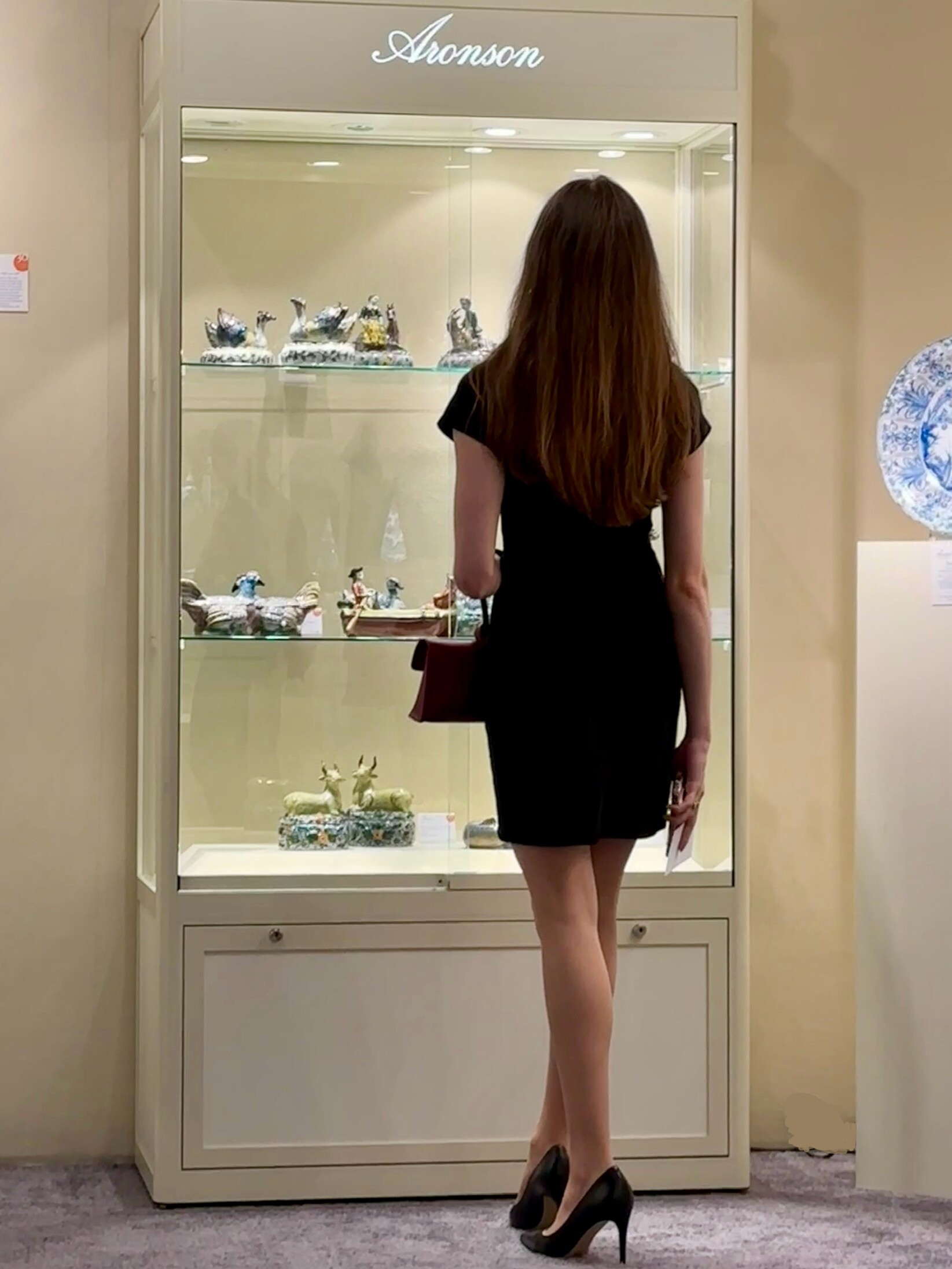
At The 70th Winter Show in New York, January 2024, we will present several objects by artist Frederik van Frytom besides each other. There is hardly any other master known that mastered the fine line between applied arts and fine arts.
Frederik van Frytom (1632 – 1702)
In the midst of the bustling 17th-century Delft, where the enchanting world of ceramics thrived, an extraordinary artist emerged. Frederik van Frytom, renowned as Holland’s most celebrated painter of 17th-century Delft faience, was a visionary whose artistic brilliance blurred the boundaries between fine arts and applied arts. His journey is a captivating tale that unfolds against the backdrop of family connections, factories, and a profound exploration of artistic expression.
Frederik, born as Frederik Barents(z), was not merely an isolated artist but a part of a larger tapestry of family connections deeply interwoven with the Delftware industry.1 His sister, Martha, was married in 1674 but remained childless, while Frederik and his brother, Barent, each had thirteen children. The mysterious introduction of the ‘Van Frytom’ name, replacing the common patronymic ‘Barents’, remains an enigma. The origins of this unique name are uncertain, and no conclusive explanation has been found. It could have been derived from a house, a ship, a foreign place, or it is a product of fantasy. Van Frytom’s adoption of this unusual name might have been his way of setting himself apart as an artist, shedding the conventional ‘Barents’ surname. The family’s movement to Delft sometime between 1640 and 1650 marked the beginning of a remarkable artistic journey.
A pivotal chapter in Van Frytom’s life is his connection to Maria and Magdalena Barents2, two relatives whose links to the Delftware factories are of significant note. In 1642, Maria married Arien Gerritsz. Pols, a ‘platielbacker’ or faience potter, while their daughter, Aeltje, married Dirck Pietersz. van Dalen, a ‘platieldraaijer’ or faience thrower, in 1668. Tragically, Maria’s untimely passing in 1653 resulted in Frederik being appointed as the guardian of Aeltje and her siblings. These connections became integral to Van Frytom’s journey, illustrating his proximity to the world of Delftware.
Frytom’s story is not confined to the realm of Delftware. His artistic prowess extended to captivating paintings on both canvas and panel. The themes and style of Van Frytom’s paintings bore a striking resemblance to the works of prominent Delft painters, such as Jacob van Ruisdael3, Aelbrecht Jansz. Verschouw4 and Beuckel Jansz. Draijer5. Van Frytom was renowned for his landscapes, a visual feast created with different colors, intricate contours, and thousands of tiny dots. Van Frytom’s landscapes were not mere paintings but multi-layered compositions that suggested depth and space, with a foreground featuring solitary trees, bushes, and delicate, elegantly draped figures. The background gave his panoramic landscapes an unmatched sense of vastness. Speculations suggest that Van Frytom may have received training from Pieter Jansz. van Asch (1603-1678), a close acquaintance of the Van Frytom family. The similarity in style and themes between their works hints at a potential mentorship.
Van Frytom’s paintings, whether on faience or canvas, were characterized by panoramic landscapes with solitary figures, set against majestic natural backdrops. His remarkable ability to work independently, not tied to a particular pottery, marked him as an exceptional talent. He received the guild’s permission to work on his own. Such independence was typically granted to artisans with disabilities or those needing the privacy of their own studios. This privilege was indicative of Van Frytom’s extraordinary skill and perhaps a sign of the artistic secrets he possessed. Van Frytom’s journey included associations with Delftware factories. As his career progressed, he was recorded in the inventories of De Metaale Pot, a factory owned by Lambertus Cleffius from 1679 to 1691. It’s possible that Van Frytom secured (production) capacity in the factory for his own works, and the 1691 inventory listed him as a debtor, suggesting a transaction dating back to 1684. This deepened connection to factories like De Metaale Pot added a layer of complexity to Van Frytom’s artistic journey.
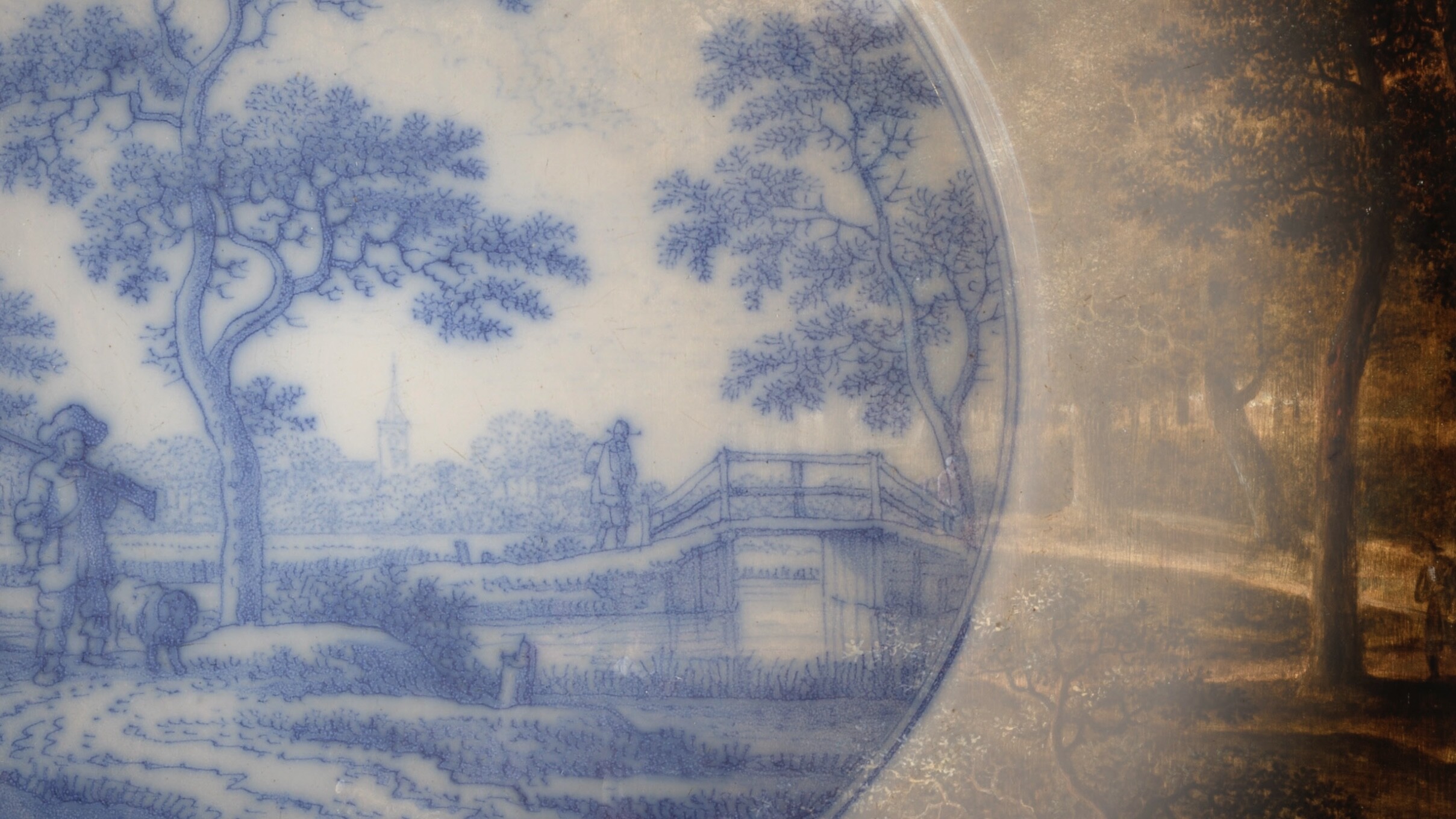
Van Frytom painted on earthenware in a monochrome blue palette, often leaving large areas undecorated. The areas of white in the borders of his painted objects draws emphasis towards the depth and suggestion of light in his serene, pastoral paintings.6 Van Frytom was also responsible for the preparation of the clay in addition to his painted decoration. This was an unusual practice for many factories, where an object was typically potted and painted by different craftsmen. However, Van Frytom was a meticulous craftsman, who was aware that the slightest imperfection in the clay or in the paints would spoil the total effect. As such, it is unlikely that he allowed others to prepare his raw materials unless they were completed under his direction within his own studio. Van Frytom used extraordinarily fine and pure clays that he blended himself. By washing and sifting them over and over again, the impurities and foreign bodies (such as mineral residues, plant fibers and coarse particles) disappeared.7 After kneading the clay, he threw the plates and dishes on the wheel to prepare the first firing. The resulting biscuit ware was still absorbent, and was then covered with several layers of tin enamel. This method, which is named ‘dubbel wit’ (double white) in literature, produced the beautiful white color of the objects. The blue decoration was then applied with wet pigments on the unfired and thus absorbent, powdery and fragile layer of tin enamel. This meant that no alterations were possible, since the porous ground would immediately absorb every touch of the brush.8
Frederik van Frytom’s artistic execution is so personal and distinct that any observer can easily recognise his work. The manner in which he painted trees with small pointillist touches, his small and graciously draped characters, and his delicate use of the brush to depict atmospheric clouds plunge the spectator into his contemplative style. It should be noted that Van Frytom belonged to the reform Calvinist church. In the 16th century, Jean Calvin (1509-1564), emblematic figurehead of the Reform Movement, stated that religious paintings and altarpieces were considered idolatry objects and should be withdrawn from the churches’ walls.9 Many painters shifted their specialisation towards landscape paintings, which they frequently infused with a highly spiritual symbolism. Dutch artists also evolved towards naturalism and paintings of idillic landscapes. The style was reinforced through grand tour excursions to Italy, where artists would draw and paint mountainous landscapes, often featuring ancient ruins bathed in the warm summer light. These works were frequently reproduced as woodcuts, etchings or engravings, and probably influenced those, like Van Frytom, who never left the country. Van Frytom also had a way of capturing a serene and captivating atmosphere through the depiction of light, bathing the scene with a silent meditative quality. Thus, by charming our spirit and enchanting our eyes, Frederik van Frytom shows us the way toward a harmoniously organised utopian landscape, where calm and beauty reign.
Despite his great talent, he was never admitted to the guild, only as ‘guild-hand’ (gildeknecht). Frederik may not have amassed great wealth, but he left behind an enduring legacy. His life and work offer a glimpse into a world where artists seamlessly moved between different artistic realms, transcending the boundaries of their crafts.
Frederik van Frytom’s artistic journey is an exploration of family ties, factory connections, and the intricate blend of fine and applied arts. His ability to seamlessly transition between the delicate world of ceramics and the expressive realm of painting offers a profound lesson: the fine line between these two artistic domains is not rigid but porous, inviting artists to explore and redefine creative boundaries.
The plate and painting illustrated in this publication were loaned to the Royal Delft Museum for their captivating exhibition, “From Ruisdael through Frytom: 17th Century Art or Craft?” held from November 8th, 2022 through March 15th, 2023. This distinguished showcase explored the delicate intersection between art and craftsmanship during the 17th century.
 CHINESE 阿伦森 WEBSITE