
Images on this website are licensed under a
Creative Commons Attribution-NoDerivs 3.0 Unported License.
OBJECT
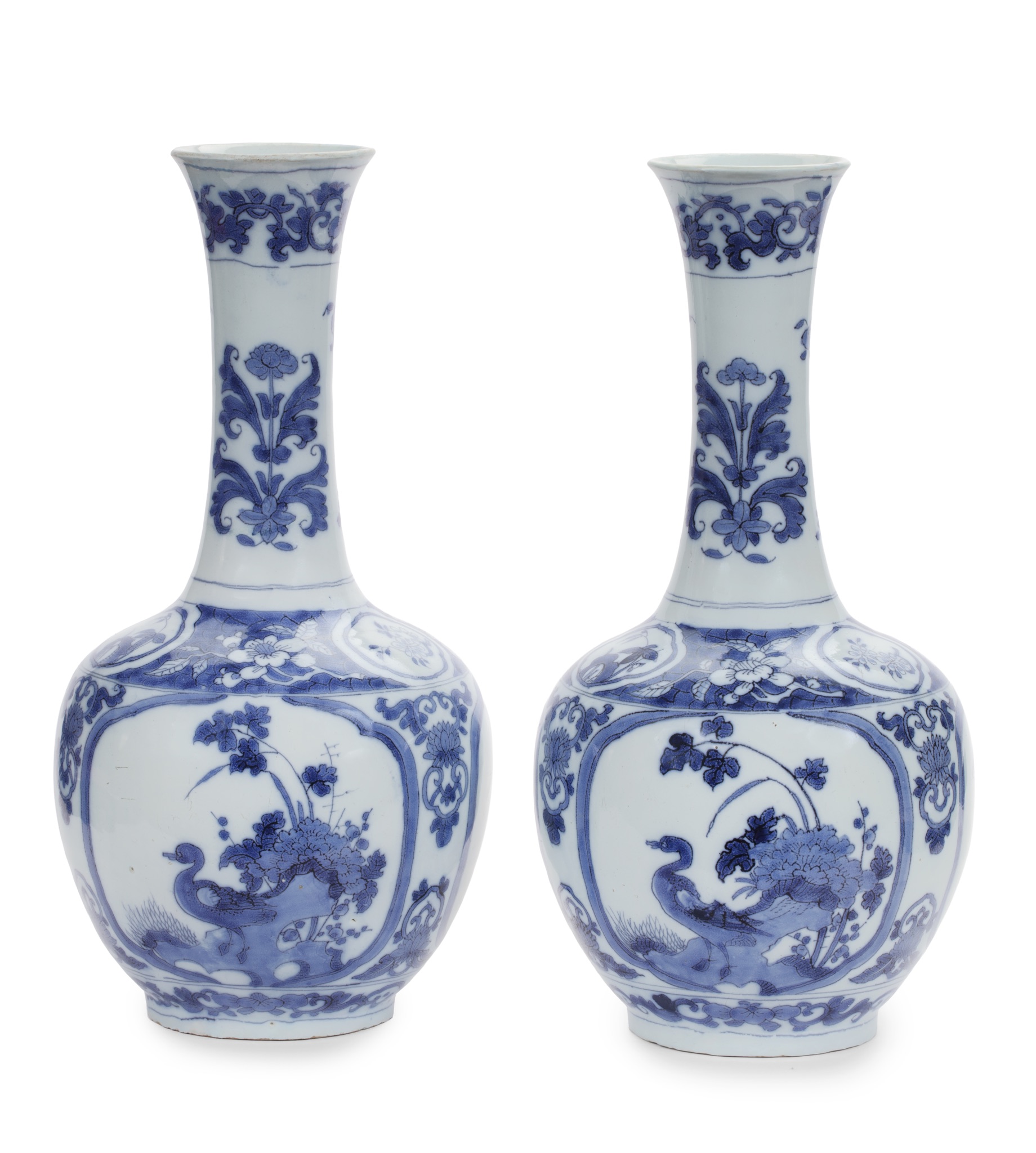
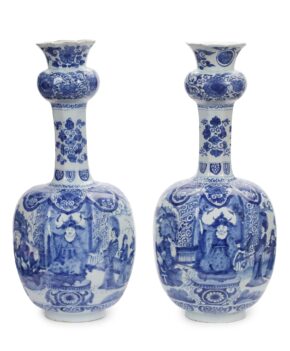
D2611. Pair of Bottle Vases
Delft, circa 1690
DIMENSIONS
Heights: 31 cm. (12.2 in.)
NOTE
This pair of bottle-shaped vases reflects the pronounced influence of Chinese porcelain on Delftware at the end of the seventeenth century. Painted in deep cobalt blue, each vase features two large panels with ducks in rocky river landscapes framed by flowering branches and grasses: motifs associated with harmony, renewal, and the rhythms of nature. These narrative scenes alternate with Asian-inspired ornamental reserves, creating a balanced decorative scheme around the bulbous body.
The model derives from Chinese prototypes of the Chongzhen period (1628–1644), also known as the Transitional Period. During these years, the decline of the Ming imperial kilns allowed private workshops to flourish, producing inventive forms and richly detailed designs often influenced by woodblock prints. Floral motifs on the necks, including tulip-shaped blossoms, already appear on such Chinese examples and were directly adopted by Delft potters.
By the late seventeenth century, Delft factories responded to the strong European appetite for imported Chinese porcelain by creating faience interpretations that blended Asian sources with local taste. While borrowing key elements, such as waterbirds, rocky landscapes, and ornamental borders, they also introduced distinctly Dutch floral motifs, including tulips celebrated during the Dutch Golden Age. The resulting decoration forms a hybrid aesthetic: recognizably Chinese in origin yet adapted to European preferences.
Pairs of Delft bottle vases from this early period are uncommon. Their refined proportions and synthesis of Eastern and Western motifs illustrate the dynamic artistic exchange that shaped Delftware during the seventeenth century.
 CHINESE 阿伦森 WEBSITE