
Images on this website are licensed under a
Creative Commons Attribution-NoDerivs 3.0 Unported License.
OBJECT
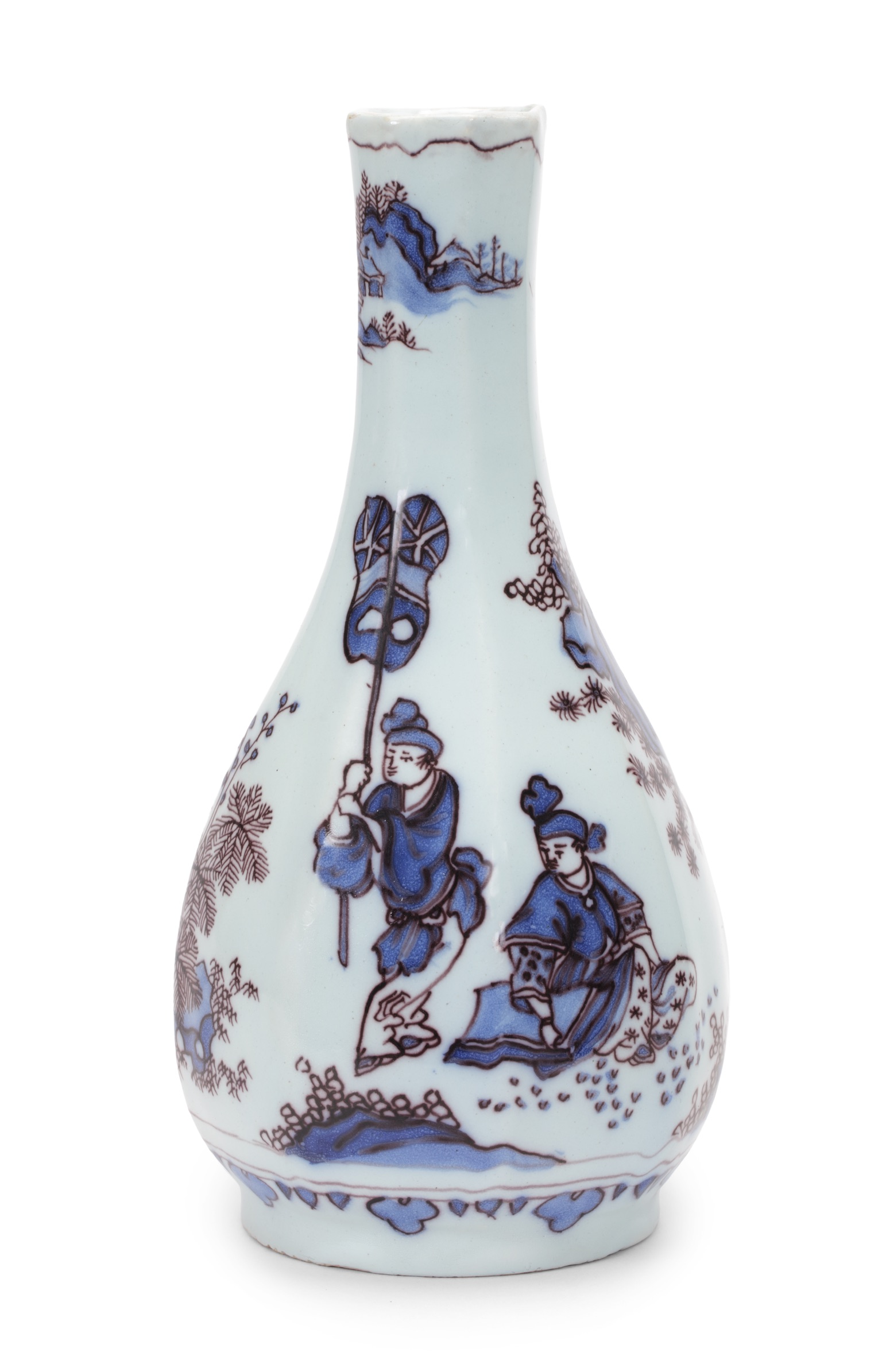
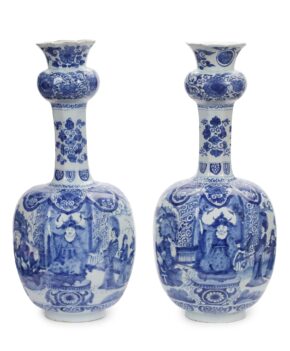
D2606. Octagonal Bottle Vase
Delft, circa 1680
Marked SVE and numeral 3 in manganese for Samuel van Eenhoorn, the owner of De Grieksche A (The Greek A) factory from 1678 until 1685
DIMENSIONS
Height: 21 cm. (8.3 in.)
NOTE
Produced under the tenure of Samuel van Eenhoorn, this vase exemplifies the hallmarks of his style: the use of trek, a fine outline in blue, manganese, or violet to accentuate figures and details, combined with a blue and manganese palette, a subtly bluish glaze, and refined chinoiserie decoration inspired by Chinese Kangxi porcelain (1662–1722). The painted scene depicts a standing servant between two seated figures in a fenced garden, and on the reverse, a seated figure with his attendant bearing a large fan.
Samuel van Eenhoorn inherited De Grieksche A from his father Wouter in 1678, by which time the factory had already earned an unrivalled reputation for high-quality blue-and-white wares in the Chinese style. During his seven years as owner, Delft entered what later became known as its “Golden Age” (circa 1680–1720), marked by artistic and technical excellence. Van Eenhoorn’s refined aesthetic, blending Chinese motifs with elements drawn from other Far Eastern sources, distinguished his production from that of his contemporaries.
His clientele included the highest levels of society, notably King William III and Queen Mary II, who were passionate collectors of Delftware. Archaeological excavations at Het Loo Palace have uncovered fragments of exceptional SVE-marked pieces, suggesting that Van Eenhoorn produced works to royal specifications. His position in the industry was equally prominent: in 1684 he served as one of three spokesmen sent to England to protest the long-standing embargo on Dutch ceramics. After his death in 1685, his widow briefly managed the factory before selling it to her brother-in-law, Adrianus Kocx, who continued the tradition of excellence established under Samuel’s leadership.
 CHINESE 阿伦森 WEBSITE