
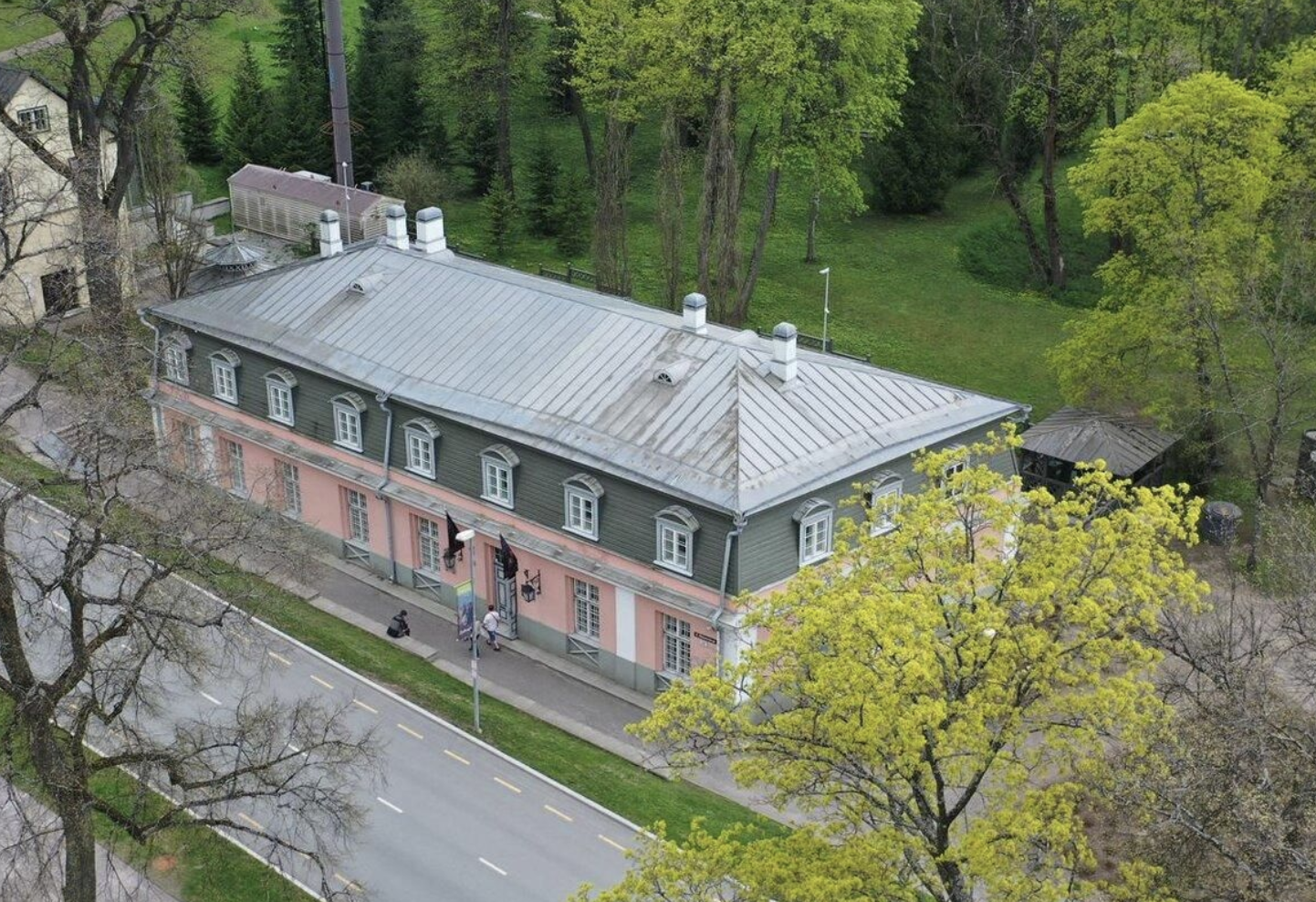
The Mikkel Museum is a branch of the Art Museum of Estonia and opened in 1997. It is rooted in the remarkable donation of the private collector Johannes Mikkel (1907–2006), who is considered one of the most versatile art collectors in Estonia. His wide-ranging collection, spanning Western European, Russian, Chinese, and Estonian art from the sixteenth through the twentieth centuries, forms an important part of the Art Museum of Estonia’s holdings of foreign art. Since its foundation, the museum has developed a distinctive profile through its focus on private collections, presenting exhibitions that bring to light objects seldom accessible to the public and that reflect the individual passions and narratives behind collecting. Within this broader framework, Delftware is also represented, often in dialogue with Asian porcelain, which served as its primary source of inspiration.
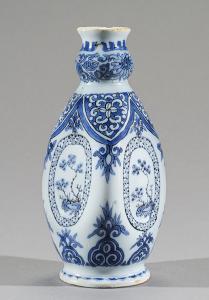
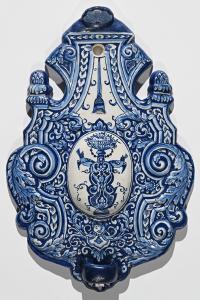
On 28 March 2026, the Mikkel Museum opened the exhibition Delft Blue: Ceramic Treasures from a Private Collection, offering a compelling insight into the world of the collector Heikki Pauts. A professional archaeologist, Pauts assembled the core of his collection during two decades in the Netherlands, where an initial aspiration, to acquire a single piece of Delftware, grew into a collection of nearly 200 objects. Spanning from the early seventeenth to the nineteenth century, the collection reflects a sustained and focused engagement with Delft ceramics, one that has continued even after his return to Estonia. The exhibition is notable for its breadth and diversity, representing a wide range of Delft factories and offering a nuanced overview of the so-called Golden Age of Delft pottery. Among the highlights are an early, finely painted vase (Fig. 1) and a wall appliqué (Fig. 2).
The display has been carefully conceived in relation to the museum’s permanent collection. As noted by director Aleksandra Murre, the exhibition enters into dialogue with the presentation of Chinese and Japanese porcelain on the museum’s second floor, objects that once inspired Delft potters, while also incorporating examples of Delftware already in the museum’s holdings. These include a pair of large vases marked “AP” for Anthonij Pennis, owner of De Twee Scheepjes (The Two Little Ships) factory from 1764 to 1770 (Fig. 3).
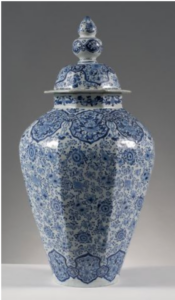 Fig. 3 Large vase with cover, one of a pair, marked AP for Anthonij Pennis, owner of De Twee Scheepjes (The Two Little Ships), factory from 1764 to 1770, and later by his widow, Pennis-Overgaauw, from 1770 to 1782, Collection of the Estonian Art Museum (inv. nr. EKM j 46248/ab Mi 162/ab)
Together, the exhibition and the broader collection highlight not only the artistic achievements of Delft, but also the vital role of international trade in its development. The Estonian interest in Delftware cannot be fully understood without reference to the extensive maritime networks that connected the Dutch Republic to regions such as the Baltic. Through these routes, both goods and ideas circulated: Asian porcelain reached Europe via global trade, while Delftware itself found markets across Northern and Eastern Europe. In this context, the presence of Delft ceramics in this Estonian museum reflects a long history of exchange, in which commerce, taste, and artistic production were closely intertwined.
 CHINESE 阿伦森 WEBSITE