
Images on this website are licensed under a
Creative Commons Attribution-NoDerivs 3.0 Unported License.
OBJECT
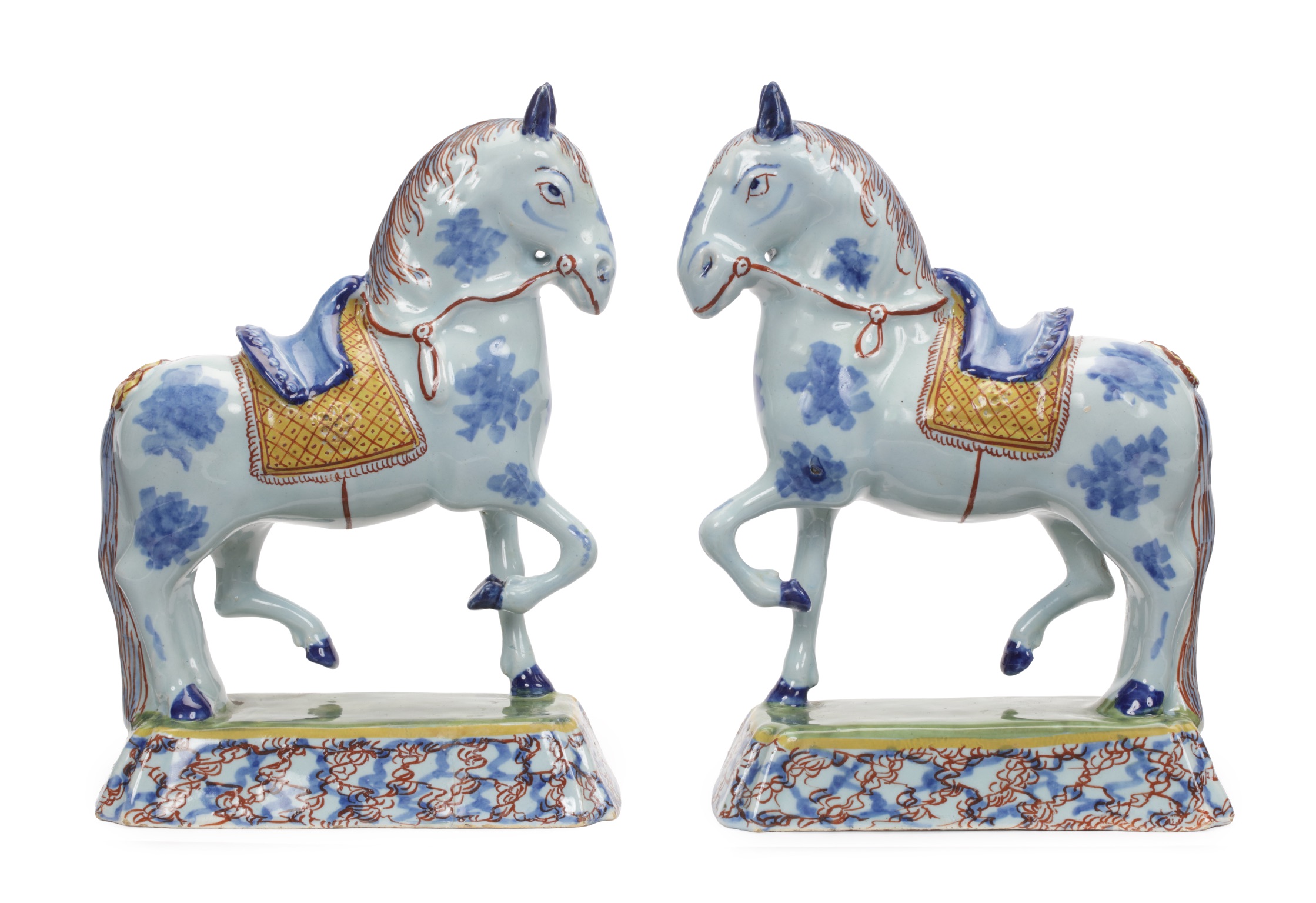
•D2661. Pair of Horses
Delft, circa 1760
DIMENSIONS
Height: 12.7 cm. (5 in.); Width: 17.8 cm. (7 in.)
PROVENANCE
Private collection, Dresher, Pennsylvania;
Dutch private collection before 1949 and transferred to the United States after 1949 and retained within the same family collection thereafter
NOTE
Animal figures occupy a distinctive place within the eighteenth-century Delftware repertoire, often described as a ceramic menagerie. Birds, dogs and pastoral animals were produced as decorative objects for mantelpieces, cabinets and console tables, reflecting contemporary fascination with the natural world as well as the ornamental ambitions of Delft’s potteries. These figures were valued less for anatomical accuracy than for their vitality, charm and symbolic resonance within the domestic interior.
Within this menagerie, horses form a comparatively rare and technically demanding group. Their complex modelling and extended limbs posed significant challenges in both shaping and firing, which may account for their limited production. In European visual culture of the period, the horse carried strong associations with nobility, military prowess and controlled movement, lending such figures a heightened symbolic status among Delftware animals.
The menagerie tradition drew upon multiple sources: engravings, sculptural prints, porcelain figures from Meissen and other German manufactories, and the broader ornamental vocabulary of Baroque and Rococo interiors. Delftware animals, however, retain a distinct character. Softly rounded forms and lively hand-painted decoration emphasize decorative appeal over sculptural realism. The present horses exemplify this approach, combining animated prancing poses with a refined polychrome palette that integrates them seamlessly into the broader Delftware aesthetic.
As with many animals in the Delft menagerie, the model circulated across several factories, marked and unmarked, suggesting shared molds and sustained market demand. This repetition should not be seen as a lack of originality, but rather as evidence of a successful and recognizable type within Delft’s commercial and artistic ecosystem. Seen within the context of the Delftware menagerie, these horses stand as refined examples of how eighteenth-century Delft transformed animal subjects into elegant and enduring ornaments.
 CHINESE 阿伦森 WEBSITE