
Images on this website are licensed under a
Creative Commons Attribution-NoDerivs 3.0 Unported License.
OBJECT
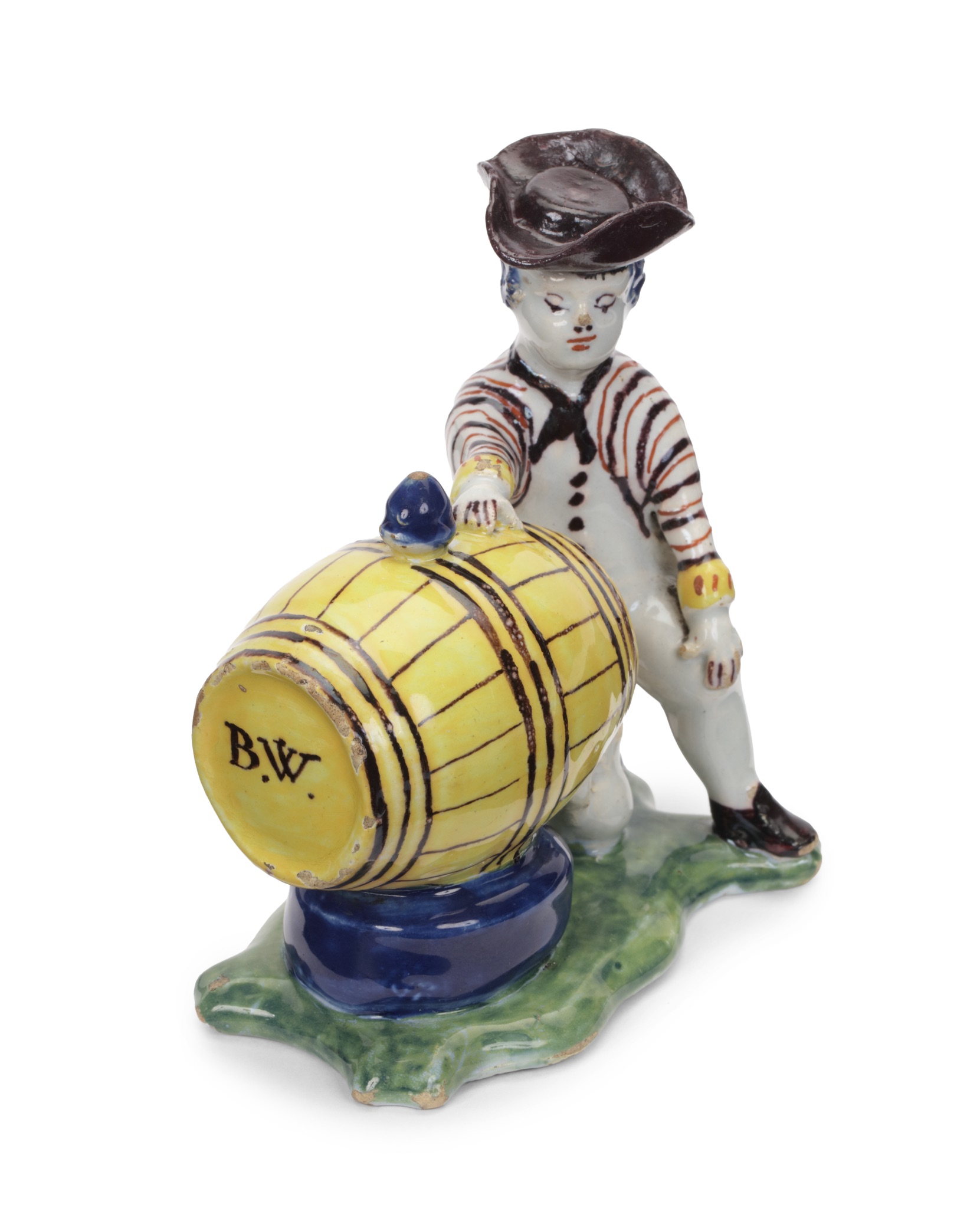
•D2649. Figure of a Barrel Man
Delft, circa 1770
DIMENSIONS
Height: 10.3 cm. (4.1 in.)
PROVENANCE
Dutch Private Collection, Maastricht;
Aronson Antiquairs, Amsterdam
NOTE
In the eighteenth-century Netherlands, wine vinegar, or wijnazijn, was a valued commodity both in domestic kitchens and for commercial use, particularly in preserving food and enhancing flavour in Dutch cuisine. The production of wine vinegar was a deliberate and skilled process, distinct from the accidental souring of wine.
The basic method involved allowing wine to undergo acetic fermentation, typically facilitated by introducing a mother of vinegar (a cellulose and acetic acid bacteria culture) into barrels of leftover or lower-quality wine. The conversion relied on warmth, oxygen, and time, conditions often optimized in specially constructed spaces known as azijnkamers (vinegar rooms), frequently located in the attics of townhouses or in dedicated workshops.
A notable feature of this process in the Netherlands was the use of specialized ‘wijn azijn’ barrels, often made from oak or chestnut wood. These barrels were generally smaller than those used for wine storage, and were designed to allow for increased surface contact between the liquid and air, an essential factor for promoting the oxidative fermentation. Some barrels even included removable lids or apertures to aid in this process. Markings such as WIJN AZIJN were occasionally inscribed or branded onto the barrels to denote their specific use, and to avoid contamination of wine or other liquids stored in similar casks.
Vinegar-making was sometimes part of the broader activities of brewers, distillers, or apothecaries, but it was also carried out at home. Housekeeping manuals of the period occasionally included vinegar recipes, indicating its domestic importance. The resulting vinegar ranged in quality and could be aged further to produce stronger or more refined varieties.
 CHINESE 阿伦森 WEBSITE