
Images on this website are licensed under a
Creative Commons Attribution-NoDerivs 3.0 Unported License.
OBJECT
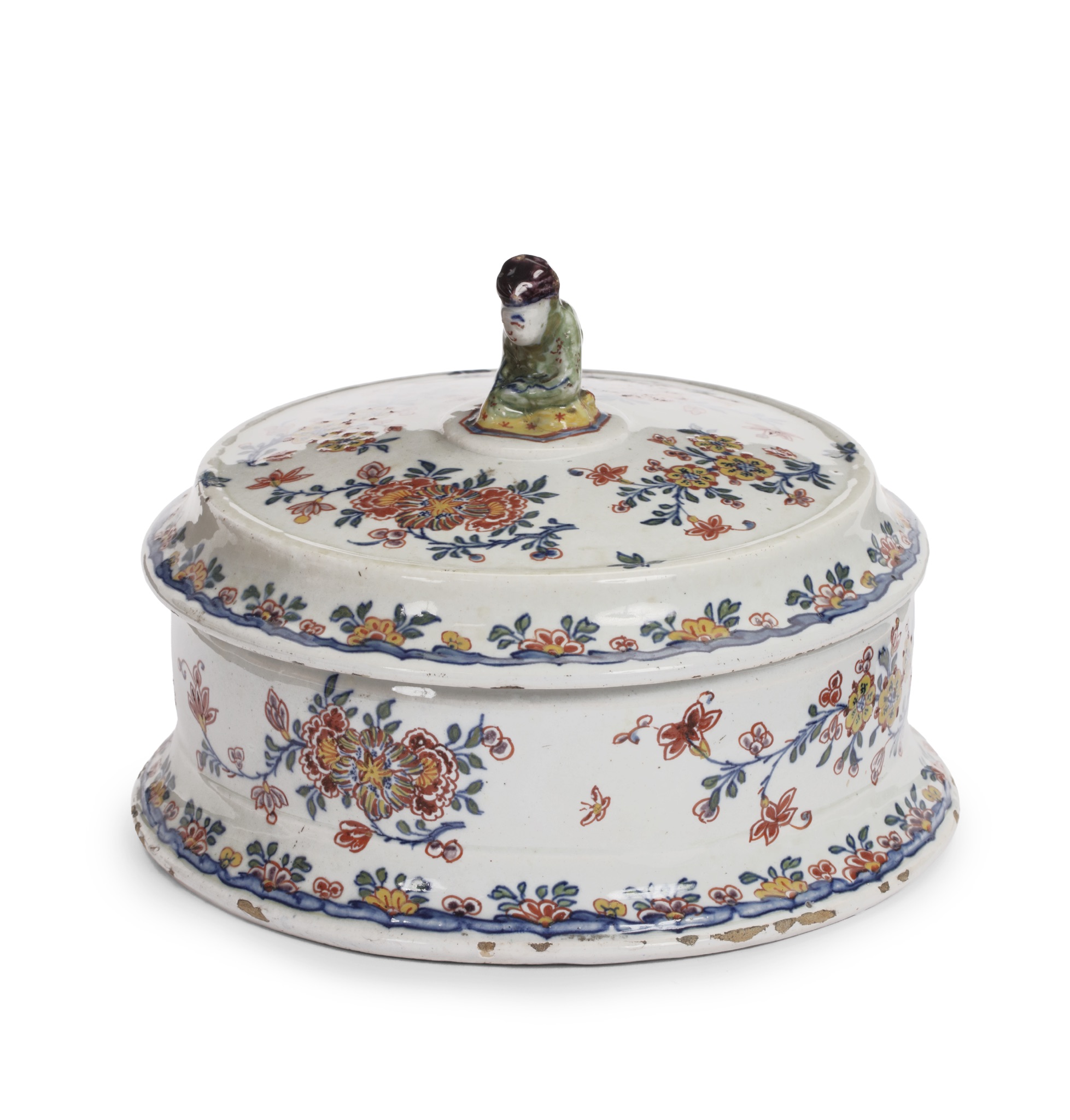
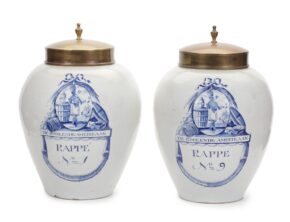
D2641. Cashmere Tobacco Box
Delft, circa 1740
DIMENSIONS
Height: 10.7 cm. (4.2 in.)
PROVENANCE
Dutch Private Collection, Maastricht;
Aronson Antiquairs, Amsterdam
LITERATURE
Fourest 1980, p. 159
NOTE
Introduced to Europe at the end of the fifteenth century, tobacco rapidly transitioned from a botanical curiosity with purported medicinal benefits to a widely consumed commodity. In the Dutch Republic, tobacco culture developed earlier and more extensively than in most neighboring countries. Domestic cultivation emerged in regions such as Utrecht and Gelderland, while large quantities of tobacco imported from the English colonies in Virginia helped meet the growing demand. By the seventeenth century, despite persistent objections from both church authorities and civic officials, smoking had become a familiar social habit embraced across all levels of society.
The widespread use of tobacco generated a rich and varied material culture. Early tobacco boxes made of silver, brass, ivory, and shell served as both practical containers and markers of social standing. Delftware initially entered this sphere through tiles and plates depicting scenes of tobacco use, but by the late seventeenth century Delft potters began producing dedicated utensils for the trade. Some of the earliest Delft faience forms associated with tobacco include spittoons and cuspidors, soon followed by tobacco boxes for domestic use and larger jars intended for storage in shops and warehouses.
Far from being purely functional, Delft tobacco boxes and jars were designed to be visually prominent. Displayed in homes, taverns, and commercial interiors, they communicated refinement, prosperity, and participation in an increasingly global luxury economy. Their decorative schemes, often combining floral ornament, allegorical figures, or genre scenes, demonstrate how Delft potters responded to new consumer tastes shaped by the expanding tobacco trade.
 CHINESE 阿伦森 WEBSITE